
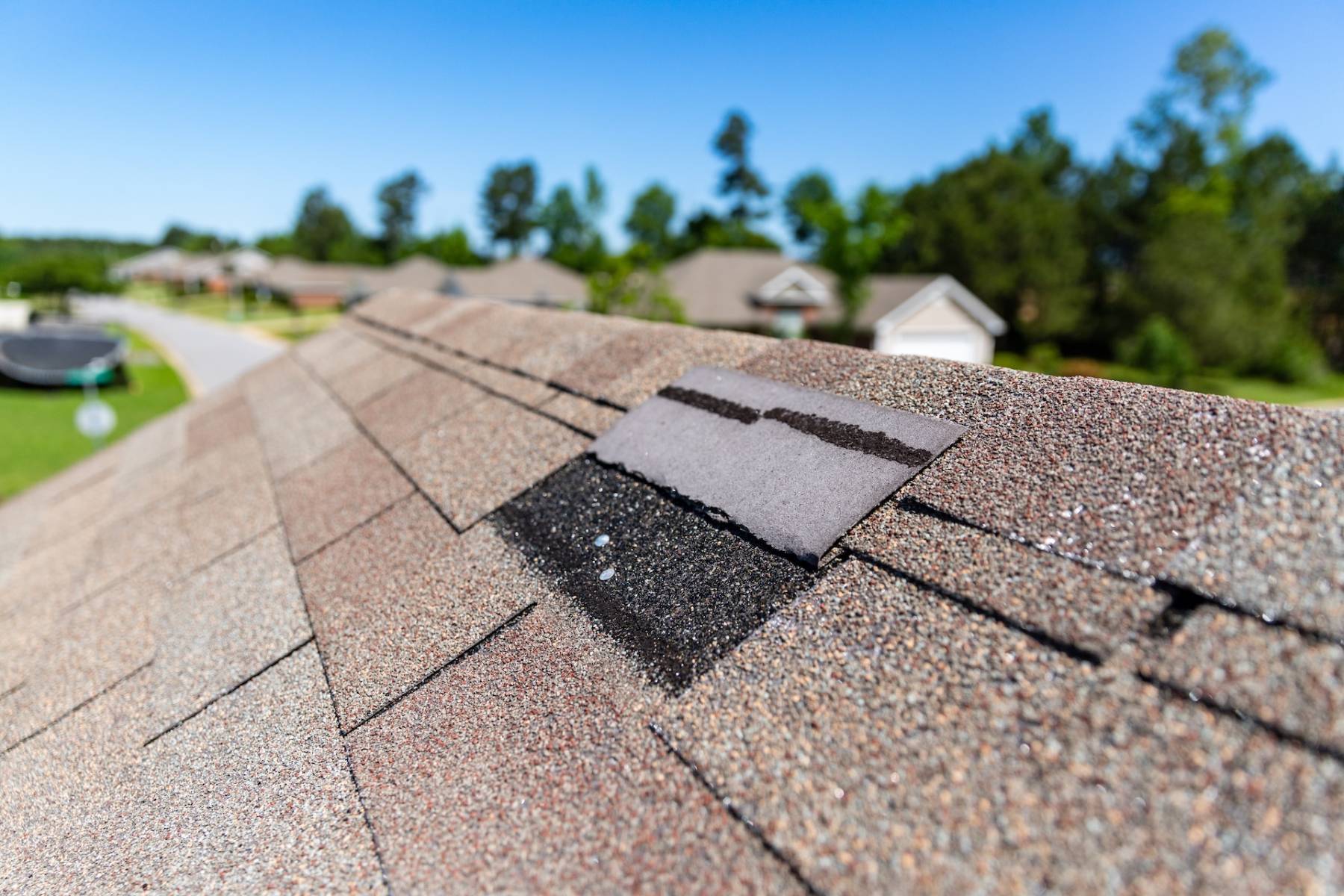
A hail damage inspection report can leave Berthoud homeowners staring at unfamiliar terms right after one of the Front Range’s frequent summer storms. Colorado’s position along what meteorologists commonly call Hail Alley means this kind of inspection comes up often here, so translating the language into something plain and useful matters more than it might in other parts of the country.
“Granule Displacement”
This phrase describes the protective granules on asphalt shingles being knocked loose by hail impact, leaving bare or thinned spots on the shingle surface. A hail damage inspection notes this because exposed asphalt beneath missing granules degrades faster under UV exposure, even when no leak has developed yet.
“Bruising”
Bruising refers to a soft spot on a shingle where the impact weakened the material without fully cracking it open. A hail damage inspection identifies bruising by feel and by pressing gently on suspect areas, since these spots often are not visible from the ground and can develop into a full failure point over time.
“Mat Exposure”
This term means the fiberglass or organic mat beneath the asphalt coating has become visible, indicating impact severe enough to strip away the surface layer entirely. A hail damage inspection treats mat exposure as a more serious finding than simple granule loss, since the shingle’s weatherproofing layer has been directly compromised.
“Soft Metal Denting”
Gutters, downspouts, vents, and other soft metal components often show denting even when the roof surface itself looks relatively unaffected, since these materials deform more easily than shingles. A hail damage inspection uses denting patterns on these components as one data point when assessing overall storm severity across a property.
What a Hail Damage Inspection Means by “Functional Damage” vs. “Cosmetic Damage”
This distinction matters more than almost any other phrase in the report. Functional damage means the hail has compromised the shingle’s ability to perform its job, while cosmetic damage affects appearance without affecting performance. A hail damage inspection separates these categories carefully, since insurance claims often hinge on which category a given finding falls into, and adjusters weigh the two very differently when reviewing a submitted claim.
Why This Distinction Drives Insurance Outcomes
According to the National Weather Service’s Denver/Boulder forecast office, the Front Range corridor experiences some of the most frequent and severe hail activity in the country, making hail damage claims a regular part of homeownership in this region. A hail damage inspection that clearly documents functional versus cosmetic findings gives homeowners the strongest possible foundation when working with an insurance adjuster.
What “Test Square” Means in a Hail Damage Inspection
Inspectors sometimes reference a test square, a small marked area used to count hail hits per unit of roof area as a standardized way to estimate overall storm impact. A hail damage inspection uses this method to give an objective count rather than a subjective impression of how bad the damage really is, which carries real weight when a claim comes down to documented evidence.
Frequently Asked Questions
How soon after a hailstorm should I schedule this inspection? Scheduling within a few weeks is reasonable, giving time for any delayed leaks to appear while still documenting damage before conditions worsen further.
Does cosmetic damage still matter if it won’t cause a leak? It can still matter for insurance purposes depending on policy language, though functional damage is generally the stronger basis for a claim.
Will every roof show the same hail damage inspection findings after a storm? No. Roof age, material type, and pitch all affect how a given hailstorm impacts a specific roof differently than its neighbors.
Can I use this report directly with my insurance company? Yes. A documented report with clear terminology and photos gives adjusters the specific information needed to evaluate a claim.
Understanding your report’s language is the first step toward getting a fair insurance outcome. If your Berthoud roof has weathered a recent storm, schedule your inspection with Front Porch Inspections and get a hail damage inspection with a report you can actually use.
Front Porch Inspections proudly serves Berthoud, Fort Collins, Loveland, Longmont, Windsor, and the surrounding Northern Colorado area.